Select FCL vs LCL Shipping – Which mode is best for Your Business?
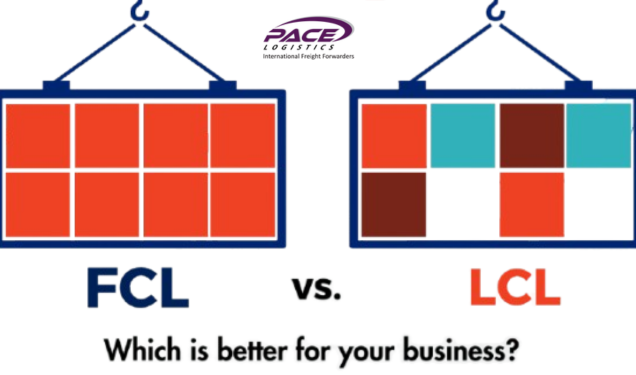
In today’s global economy, businesses rely on international shipping to transport goods efficiently. Businesses must select the optimal shipping method for both safe delivery and cost savings. When it comes to sea freight, two primary options include Full Container Load (FCL) and Less than Container Load (LCL) shipping methods. Pace Logistics is familiar that selecting the best shipping solution is crucial for business success. In this article, we describe the FCL vs LCL Shipping as the right choice for your business. Contact Pace Logistics today and let’s move your business forward!

What is FCL (Full Container Load) Shipping?
FCL shipping refers shipper using the entire container exclusively for their cargo. In FCL container is sealed at the point of origin and remains packed until it reaches the destination. It ensures maximum security and efficiency for goods. FCL shipping utilizes standard containers, typically 20-foot (TEU) and 40-foot (FEU) units, allowing businesses to ship large volumes efficiently while ensuring consistent handling across ports worldwide.

Key Benefits of FCL Shipping
Although FCL Containers are not consolidated with other shipments, therefore experience fewer delays in transit. In FCL, consignee goods remain sealed in the entire container. It reduces the risk of damage during shipment handling. It offers a lower cost per unit than LCL. FCL mode has no risk of cross-contamination or mix-ups with other cargo.
When Should You Choose FCL?
FCL mode is used for shipping large volumes of cargo of at least 10CBM or more. When delivering goods, security and handling are top priorities. When businesses want to reduce transit times and avoid additional handling. FCL emerges as the optimal choice when cost efficiency for bulk shipping is essential.
What is LCL (Less than Container Load) Shipping?
LCL shipping refers method where multiple shippers share space in a single container. This method is also called consolidated. FCL is ideal for businesses that do not have enough cargo to fill the container.
Key Benefits of LCL Shipping
In LCL, the consignee pays only for the use of container space. This makes it ideal for small and sample shipments. It best option for businesses with fluctuating shipment volumes and seasonal demands. It allows smaller, frequent shipments and reduces warehousing costs. LCL mode makes it easier to enter global markets without the need to commit to full container costs.
When Should You Choose LCL?
Less than Container Load (LCL) shipping is an effective choice for businesses that want to deliver cargo volumes of less than 10 cubic meters (cbm). It enables businesses to adjust shipment sizes and frequencies as needed. When you need to save on shipping costs and have rapid delivery.
How to Maximize Your Budget
One of the crucial factors to decide between FCL and LCL is cost. FCL shipping is more cost-effective for delivering high-volume shipments. LCL shipping seems more affordable due to shared container costs.
Tips to Save Shipping Costs
Work with a top-tier logistics company like Pace Logistics to get competitive FCL and LCL shipping rates. Pace provides efficient plans for FCL and LCL shipments. The company more effectively converts smaller shipments into FCL loads that ensure savings.
Which Option is Faster?
If you need fast delivery, then FCL is the ideal option for your goods. The additional handling consolidation steps are involved in LCL shipping. However, LCL is the best option for businesses that can afford a slight delay. It offers a more flexible and economical solution.
Risk Management
Cargo security is a crucial part of global shipping. The LCL shipments are handled frequently compared to FCL. The higher chance of damage and loss in LCL shipments.
Ways to Minimize Risk
Choosing a reliable logistics partner like Pace Logistics ensures safe shipment handling. Especially in FCL and LCL shipments, use high-quality packing material to protect goods. Pace provides cargo insurance for protection against potential losses.
Right Choice for Your Business
Selecting between FCL and LCL depends on your business size, shipment volume, budget, and delivery requirements. If your company ships large quantities regularly and prioritizes speed and security, FCL is the best choice. On the other hand, if you ship smaller quantities or need more flexibility, LCL is the way to go. At Pace Logistics, we specialize in helping businesses navigate the complexities of international shipping. Whether you need FCL, LCL, or a combination of both, our expert team is ready to provide tailored solutions that maximize efficiency and minimize costs. Ready to optimize your shipping strategy? Contact Pace Logistics today and let’s move your business forward!